hub

Nephrology & Kidney Health

Cystatin C, ACR, microalbuminuria, glycocalyx, PPI and kidneys, early CKD markers

Kidneys stay silent until late: serum creatinine rises only after 40-50% of function is already lost. This hub covers protocols for early detection and renal protection: cystatin C and ACR over creatinine alone, microalbuminuria as an early marker, glomerular endothelial glycocalyx, PPI and NSAID nephrotoxicity, podocytes and filtration. Sources: JASN, Kidney International, NEJM, Lancet.

6 articles

Last reviewed: 2026-06-01 · Dr. V. Pereligyn

Conditions covered in this hub

Early CKD (stages 1-2)

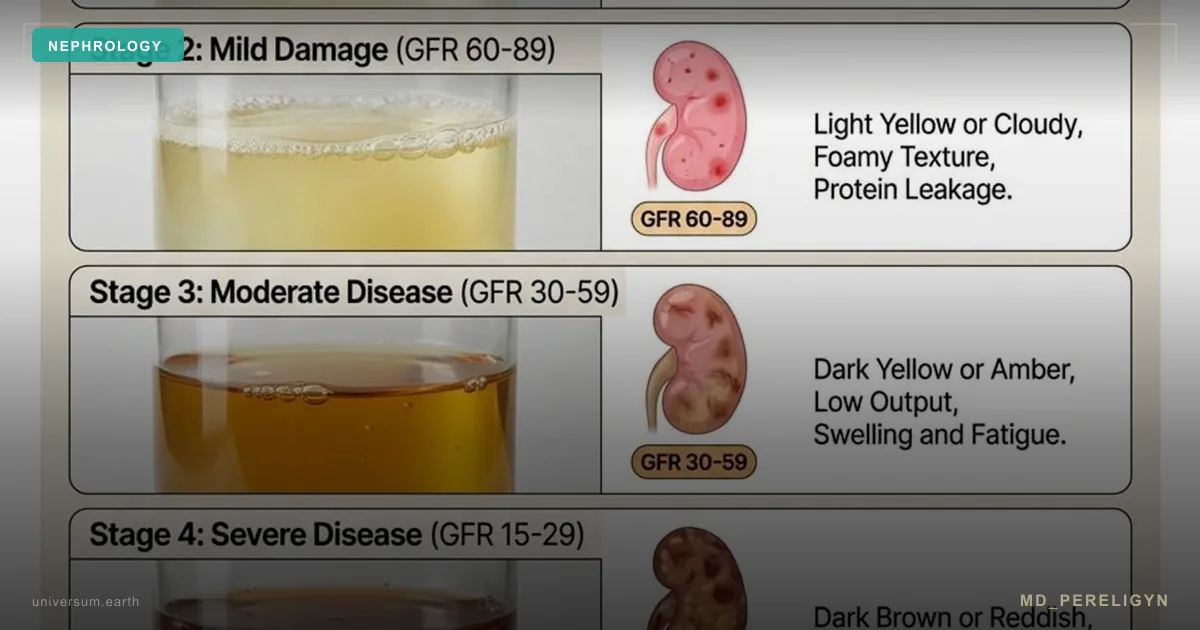
Chronic kidney disease stages 1-2 is defined as persistent (>3 months) GFR reduction to 60-89 mL/min/1.73 m² or normal GFR with markers of damage such as albuminuria or structural abnormalities. Prevalence in the general population reaches 8-10%. Frequently asymptomatic and detected only through systematic screening.

Microalbuminuria

Persistent urinary albumin excretion of 30-300 mg/g creatinine (ACR) confirmed in two of three samples over 3-6 months. An early marker of endothelial dysfunction and incipient nephropathy in diabetes and hypertension. Prevalence among T2DM patients reaches 30-40%. Independent predictor of cardiovascular events regardless of GFR.

Glomerular hyperfiltration in diabetes

Elevation of GFR above 135 mL/min/1.73 m² during sustained hyperglycemia, predominantly in early-stage T1DM and T2DM. Reported prevalence ranges 10-75% depending on measurement methodology. Driven by RAAS activation, afferent arteriolar dilation, and elevated intraglomerular pressure. Precedes the development of overt albuminuria.

Glycocalyx damage

Degradation of the glomerular endothelial glycocalyx layer due to hyperglycemia, oxidative stress, inflammation, and hyperoxia. No laboratory thresholds exist; indirect markers include plasma syndecan-1 and hyaluronan. Leads to loss of the filtration barrier negative charge, albuminuria, and systemic endothelial dysfunction with cardiovascular implications.

Drug-induced nephropathy (PPI/NSAID)

Acute or chronic kidney injury associated with proton pump inhibitors (acute interstitial nephritis) or NSAIDs (prerenal GFR decline, papillary necrosis). Relative risk of CKD with long-term PPI use is 1.20-1.50. Diagnostic criteria include temporal association, creatinine rise >0.3 mg/dL, and eosinophiluria in PPI cases.

Key laboratory markers

MarkerReferenceWhat it means
Cystatin C0.55-1.15 mg/LIndependent of muscle mass and age; more accurately reflects GFR in sarcopenia, obesity, and elderly patients.
eGFR by creatinine (CKD-EPI)≥90 mL/min/1.73 m²Screening parameter; underestimates GFR in low muscle mass and overestimates it in sarcopenia.
eGFR by cystatin C (CKD-EPI cys)≥90 mL/min/1.73 m²Used to confirm reduced GFR when creatinine is discordant with clinical context; combined formula is most accurate.
ACR (urine albumin/creatinine ratio)<30 mg/g30-300 indicates microalbuminuria, >300 indicates macroalbuminuria; first-morning void is preferred for screening.
KIM-1 (kidney injury molecule-1)<1 ng/mL (individual)Marker of proximal tubular injury; rises earlier than creatinine in AKI and toxic nephropathies.
Urinary NGAL<150 ng/mLEarly marker of acute tubular injury; increases within 2-6 hours after insult such as contrast or ischemia.
Urinary calcium/oxalate (24 h)Ca <250 mg/day, oxalate <40 mg/dayScreening for recurrent nephrolithiasis; hypercalciuria and hyperoxaluria are modifiable risk factors.

Evidence-based protocols

Dual screening: ACR + cystatin C instead of creatinine alone

Creatinine depends on muscle mass and misses early-stage CKD. Combined ACR (morning void) and cystatin C screening increases CKD detection sensitivity by 15-30% versus creatinine alone (KDIGO 2024, prospective cohorts). Protocol: annual ACR in diabetes, hypertension, obesity; cystatin C when creatinine-based GFR is borderline (60-90), in sarcopenia, or in the elderly. CKD-EPI cr-cys formula resolves discordance. Evidence quality: high (meta-analyses, guideline-grade). [1][2][3]

Glycocalyx restoration (sulodexide, hesperidin)

Sulodexide is a heparinoid with demonstrated glycocalyx density restoration and 20-30% reduction in albuminuria in diabetic nephropathy (Di.N.A.S., Sun-MICRO RCTs). Dose: 250 LSU twice daily for 6 months. Hesperidin, a citrus flavonoid, reduces syndecan-1 shedding and heparanase activity in experimental models; clinical data are limited to pilot RCTs. Evidence quality: moderate for sulodexide (RCT), low for hesperidin (mechanistic plus early RCT data). [1][2][3]

PPI deprescribing in chronic users

Long-term PPI use (>1 year) is associated with a 1.2-1.5-fold increased risk of CKD and acute interstitial nephritis (cohort studies, meta-analyses 2016-2023). Protocol: reassess indication every 8-12 weeks, taper dose over 4-8 weeks, transition to H2-blockers or alginates for non-erosive GERD. Monitor creatinine and ACR at 1 and 3 months after discontinuation. Evidence quality: moderate (observational studies with biological plausibility and consistent dose-response). [1][2][3]

Nephrolithiasis recurrence prevention: citrate + low oxalate

Oxalate stones account for 70-80% of recurrences. Potassium citrate 30-60 mEq/day raises urinary citrate and pH, reducing recurrence by 50-75% (Barcelo 1993, Soygur 2002 RCTs). Diet: oxalate restriction <100 mg/day, dietary calcium 1000-1200 mg/day (binds intestinal oxalate), fluid intake >2.5 L/day. Repeat 24-hour urine analysis at 3 and 6 months. Evidence quality: high for citrate (RCT, Cochrane), moderate for dietary measures (cohorts). [1][2][3]

Clinical case sketches

Female 52y, ACR 80→18

A 52-year-old female with diabetic nephropathy stage 2 presented with albumin-creatinine ratio (ACR) 80 mg/g, eGFR 68 mL/min/1.73m², BP 142/88. Baseline therapy: metformin 2000 mg/day, HbA1c 7.1%. Ramipril 5 mg/day was initiated and titrated to 10 mg after 4 weeks, with vitamin D3 4000 IU/day and sulodexide 250 LRU twice daily added for endothelial glycocalyx support over 6 months. At 6-month follow-up: ACR 18 mg/g (-77%), eGFR 72 mL/min/1.73m² (+4), BP 124/76, potassium 4.6 mmol/L within range. No adverse events recorded. Albuminuria reduction reached the lower microalbuminuria boundary, indicating restored glomerular filtration barrier function.

Male 64y, eGFR +12 points

A 64-year-old male with CKD stage 3a presented with eGFR 48 mL/min/1.73m², creatinine 142 μmol/L. He had taken omeprazole 40 mg/day for 7 years for GERD. Endoscopy: LA-A esophagitis, H. pylori negative. PPI deprescribing was performed: omeprazole reduced to 20 mg/day for 4 weeks, then switched to famotidine 20 mg at bedtime plus alginate post-meals, with complete PPI withdrawal at week 8. Magnesium citrate 300 mg/day was added. At 4-month follow-up: eGFR 60 mL/min/1.73m² (+12), creatinine 108 μmol/L, reflux symptoms controlled with on-demand alginate. PPI-associated acute interstitial nephritis was partially reversible.

FAQ

Which is more accurate for kidney function: creatinine or cystatin C?

Cystatin C is more accurate in patients with non-standard muscle mass: the elderly, sarcopenia, obesity, and athletes. Creatinine remains an accessible screening parameter but systematically misrepresents GFR at extremes of muscle mass. The optimal strategy is the combined CKD-EPI creatinine-cystatin formula, which reduces GFR estimation error by 30-40% compared with creatinine alone, as demonstrated in NEJM 2020.

Are proton pump inhibitors dangerous for the kidneys with long-term use?

Long-term PPI use (over one year) raises the risk of chronic kidney disease by 20-50% and is linked to acute interstitial nephritis in cohort studies and meta-analyses from 2016-2023. Risk is dose- and duration-dependent. Without absolute indications such as Barrett esophagus or erosive esophagitis, therapy should be reassessed every 8-12 weeks and tapered, transitioning to H2-blockers or alginates.

Why is GFR sometimes above normal in diabetes — is that good or bad?

GFR above 135 mL/min/1.73 m² in early diabetes is called hyperfiltration and represents a pathological state, not a normal finding. It reflects afferent arteriolar dilation and elevated intraglomerular pressure that damages glomeruli. Hyperfiltration precedes albuminuria and predicts progression to CKD. SGLT2 inhibitors, ACE inhibitors, and ARBs reduce hyperfiltration by restoring tubuloglomerular feedback and lowering intraglomerular pressure.

Can the renal capillary glycocalyx be restored?

Partial restoration has been demonstrated in RCTs for sulodexide (250 LSU twice daily for 6 months) in diabetic nephropathy, with 20-30% reduction in albuminuria and improvement in endothelial function markers. Hesperidin, omega-3 fatty acids, and tight glycemic control are under investigation. Complete restoration is not established, but slowing degradation is achievable by removing triggers: hyperglycemia, oxidative stress, and chronic hyperoxia.

What is more effective for kidney stone recurrence prevention — diet or medication?

Combination therapy is most effective. Potassium citrate 30-60 mEq/day reduces oxalate stone recurrence by 50-75% per RCT data. Dietary modification (oxalate <100 mg/day, dietary calcium 1000-1200 mg/day, fluid >2.5 L/day) adds another 20-30%. Diet alone suits first-episode patients; recurrent stone-formers with hypocitraturia require pharmacotherapy, monitored by repeat 24-hour urine collections at 3 and 6 months.

What is microalbuminuria and should I be worried about it?

Microalbuminuria is urinary albumin excretion of 30-300 mg/g creatinine (ACR), a marker of early glomerular endothelial damage and an independent predictor of cardiovascular events regardless of GFR. It is reversible with timely intervention: blood pressure control (<130/80), ACE inhibitors or ARBs, SGLT2 inhibitors in diabetes, and glycemic management. Untreated, it progresses to macroalbuminuria and CKD in 20-40% of diabetic patients.

Podocyte: foundation of glomerular filtration and a 10-year window for renoprotection

Podocyte: foundation of glomerular filtration and a 10-year window for renoprotection

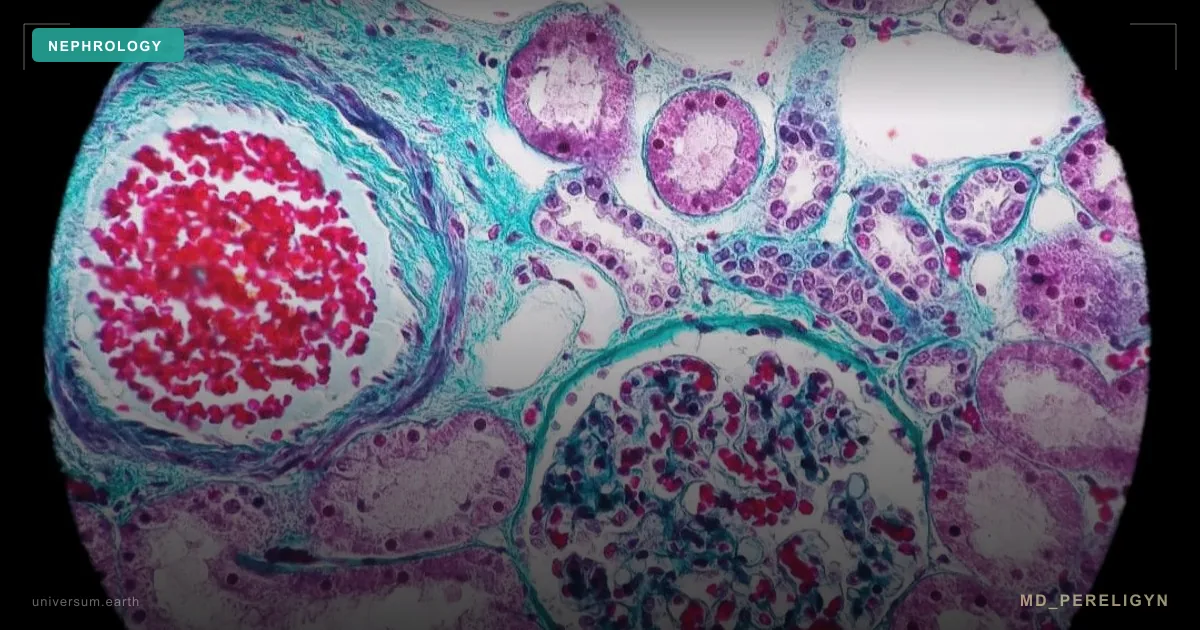
The podocyte is not merely an epithelial cell, but the final molecular filter of the glomerulus, with foot processes covering more than 1 m² per kidney. Loss of podocyte mass precedes a rise in serum creatinine by 5–15 years. This is a unique window for renoprotection, in which reversibility is supported by DAPA-CKD and CREDENCE data. I discuss slit diaphragm architecture, drivers of injury, early markers, and a holistic protocol.

12 min Read →
Microalbuminuria: an early kidney marker and a 10-year window for renoprotection

Microalbuminuria: an early kidney marker and a 10-year window for renoprotection

ACR (albumin/creatinine ratio in a morning urine sample) is the most sensitive noninvasive marker of podocyte and glomerular endothelial injury. The test is simple, inexpensive, available in any laboratory, and irrationally ignored in routine practice. Microalbuminuria is detected 5–15 years before creatinine begins to rise. This is an intervention window in which reversibility is evidence-based. I review the normal range, stages, indications for screening, and a protocol for reducing albuminuria.

12 min Read →
Glomerular endothelium: the kidney's vascular filter and the glycocalyx that fails first

Glomerular endothelium: the kidney's vascular filter and the glycocalyx that fails first

The glomerular endothelium is not "ordinary kidney vessels," but a specialized filter with 70–100 nm fenestrations and a 200–400 nm thick anionic glycocalyx. It is the first structure to fail in diabetes, preceding podocyte injury and the appearance of albuminuria by 5–10 years. This is a unique intervention window in which reversibility is supported by peer-reviewed data. I review the architecture, drivers, biomarkers, and a holistic restoration protocol.

13 min Read →
Creatinine Lies: What the Standard Kidney Panel Really Measures and Where Its Blind Spots Are

Creatinine Lies: What the Standard Kidney Panel Really Measures and Where Its Blind Spots Are

Serum creatinine is not a pure marker of kidney function, but a balance between the patient’s muscle mass and the filtration capacity of the glomerulus. In women with low muscle mass, older adults, vegetarians, and patients after sarcopenia, normal creatinine can conceal stage 3A CKD. This blind window has been described in peer-reviewed data. I break down the traps of creatinine, cystatin C as an alternative, ACR, and the CKD-EPI 2021 equation.

12 min Read →
PPI and the kidney: CKD risk, acute interstitial nephritis, and when to switch to step-down

PPI and the kidney: CKD risk, acute interstitial nephritis, and when to switch to step-down

Omeprazole prescribed “just in case for gastritis” can, over ten years, quietly turn the kidney into an organ for nephrology screening. Up to 15% of the adult OECD population takes PPI for more than a year, and in half of cases the indication has not been reassessed. An eight-week course is safe; eight years without reassessment is a path to stage 3 CKD without a single obvious symptom.

11 min Read →

Need a personal consultation?

Dr. Pereligyn offers in-person and online consultations.

Book a consultation
Materials on universum.earth are intended for educational and informational purposes, are based on peer-reviewed literature, and do not replace an in-person medical consultation: every clinical case requires individual assessment of history, laboratory and imaging data, so the resource provides no diagnostic guarantee and is not a basis for self-prescribed therapy.
Author: Dr. Vladimir Pereligyn, endocrinologist. The universum.earth project is self-funded through the author's private consultation practice; it receives no support from pharmaceutical companies or supplement manufacturers. The Shop section sells supplements that the author formulates or personally endorses, which constitutes a disclosed commercial interest. Editorial decisions and clinical interpretations are not paid for or pre-approved by any third-party vendor. Case sketches are published with patient consent, fully anonymized, and contain no protected health information. Last conflict-of-interest review: June 1, 2026.