Introduction: a test that sees plaque instead of calculating risk
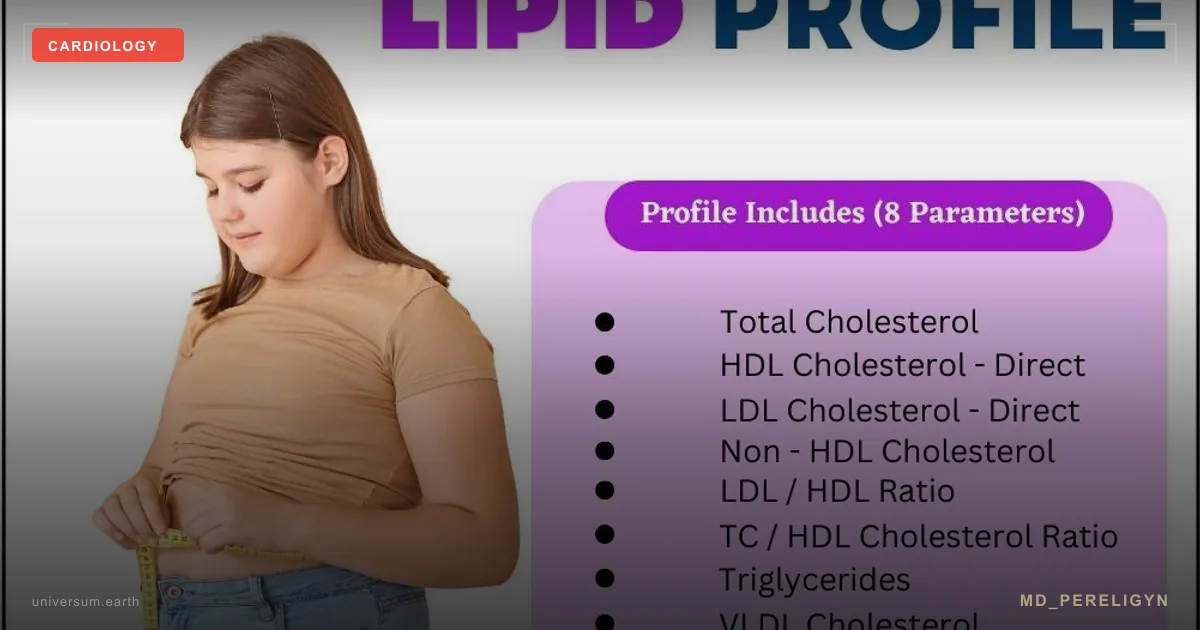
When people talk about "assessing myocardial infarction risk," they usually mean risk scores — ASCVD, SCORE2, Framingham. These scores combine age, sex, blood pressure, LDL, diabetes, and smoking, then output the probability of an event over 10 years. This is a useful tool, but it has a fundamental limitation: it does not see your own blood vessel. It averages the population.
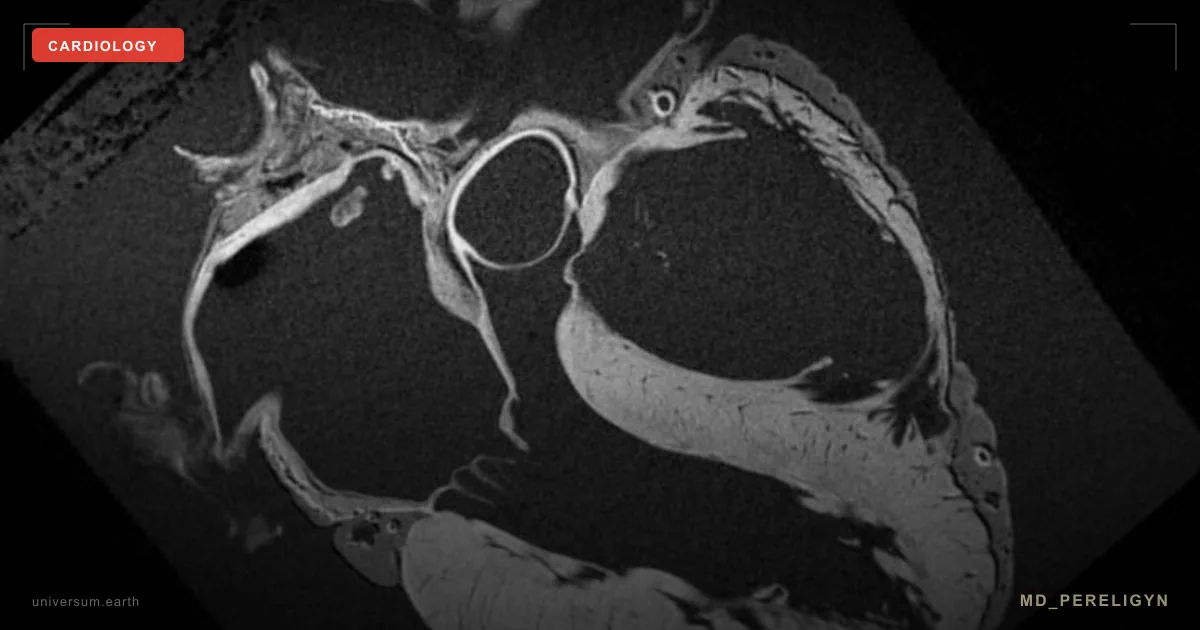
CAC score (coronary artery calcium) is a low-dose non-contrast computed tomography scan of the chest that measures coronary artery calcification using the Agatston scale. It is direct visualization of atherosclerotic plaque, not a probability.
After 10–20 years of elevated ApoB or hypertension, plaque calcifies. CT can see it. The ASCVD score cannot. That is why CAC can reclassify a patient — avoid a statin in someone who was "borderline" by risk score, or start aggressive therapy where the lipid panel looked reassuring.
🌀
What the Agatston score measures
The Agatston score sums the volume and density of calcified lesions across all coronary arteries. Calcification is a marker of mature atherosclerotic plaque. Early "soft" plaque (lipid core, fibroatheroma) may not be calcified, yet it is often the plaque that ruptures and causes myocardial infarction. Therefore, CAC sees more of the "accumulated" risk than the "acute" risk.
The method has important characteristics:
▸Low radiation dose — 0.5–1.5 mSv, equivalent to annual natural background radiation. ▸No contrast — no kidney burden, no allergic reactions. ▸High reproducibility — interobserver variability <10%. ▸10–15-year prognosis — not a one-time snapshot, but a long-term predictor. ▸Cost 100–250 USD in most countries — more accessible than angiography.
🌀
Agatston score categories
The score is divided into four clinically meaningful categories, each with its own strategy.
•Score 0 — Power of zero. No calcified plaque. This is the strongest negative predictor in people older than 45 years: 10-year myocardial infarction risk below 1%. It does not mean "zero risk forever" — in younger people and with high Lp(a), plaque may not yet have had time to calcify. Repeat in 5–7 years, especially with a family history. •Score 1–99 — mild calcification. Atherosclerosis has started but is not yet mature. Intensify prevention — lifestyle, omega-3, ApoB and blood pressure control. A statin is not prescribed by default; the decision is individualized. •Score 100–399 — moderate calcification. Equivalent to intermediate-high risk. Statin therapy is indicated for most patients, with aggressive LDL control to <70 mg/dL and discussion of aspirin if there are no contraindications. •Score ≥400 — high risk. In event prognosis, this is equivalent to established coronary artery disease (Detrano R, NEJM 2008, PMID 18367736[1]). Aggressive lipid-lowering (statin + ezetimibe ± PCSK9), blood pressure control, and discussion of functional testing (stress test, CT angiography).
Each doubling of CAC above 100 means a doubling of risk. Score 800 is not simply Score 400 "×2 in the wrong direction" — it is exponentially worse.
| Score | Category | Action |
|---|---|---|
| 0 | no plaque | risk <1%, no default statin |
| 1–99 | mild | intensify prevention |
| 100–399 | moderate | statin, LDL <70 |
| ≥400 | high | statin+ezetimibe±PCSK9 |
🌀
Who should have the test
CAC provides the most information not for everyone, but for a clearly defined subgroup — people in whom the statin decision is "50/50."
▸Age 40–75 years + intermediate ASCVD risk (5–20% over 10 years) — to refine the statin decision. This is the main indication supported by the 2019 ACC/AHA guidelines. ▸Family history of early myocardial infarction (father < 55 years, mother < 65 years) — regardless of lipid levels. ▸Perimenopausal and postmenopausal women with borderline lipids — in women, the ASCVD score often underestimates risk. ▸Patients who do not want to take a statin despite moderate lipid risk — CAC = 0 provides a justified reason to defer; CAC > 100 provides a reason to "start after all." ▸Patients with metabolic syndrome, prediabetes, PCOS — for vascular age stratification. ▸Lp(a) > 50 mg/dL — CAC helps show how much of the genetic risk has already been realized.
🌀
Who does NOT need CAC
▸Age < 40 years without family history — calcification has not yet had time to develop, so the result may be falsely reassuring. ApoB and Lp(a) work better in younger people. ▸Already established coronary artery disease, prior myocardial infarction, previous stenting/CABG — a statin is indicated regardless of the score, and the decision has already been made. ▸Pregnancy — radiation exposure, an absolute contraindication. ▸Patients with CAC > 400 in the recent past — repeating it every year is pointless unless the treatment plan is changing. ▸End-stage systemic disease of any kind — the priority is different.
🌀
What CAC does NOT replace
The most common mistake is treating CAC as a universal "one test for everything." It is not. CAC sees mature calcified plaque. It does not see:
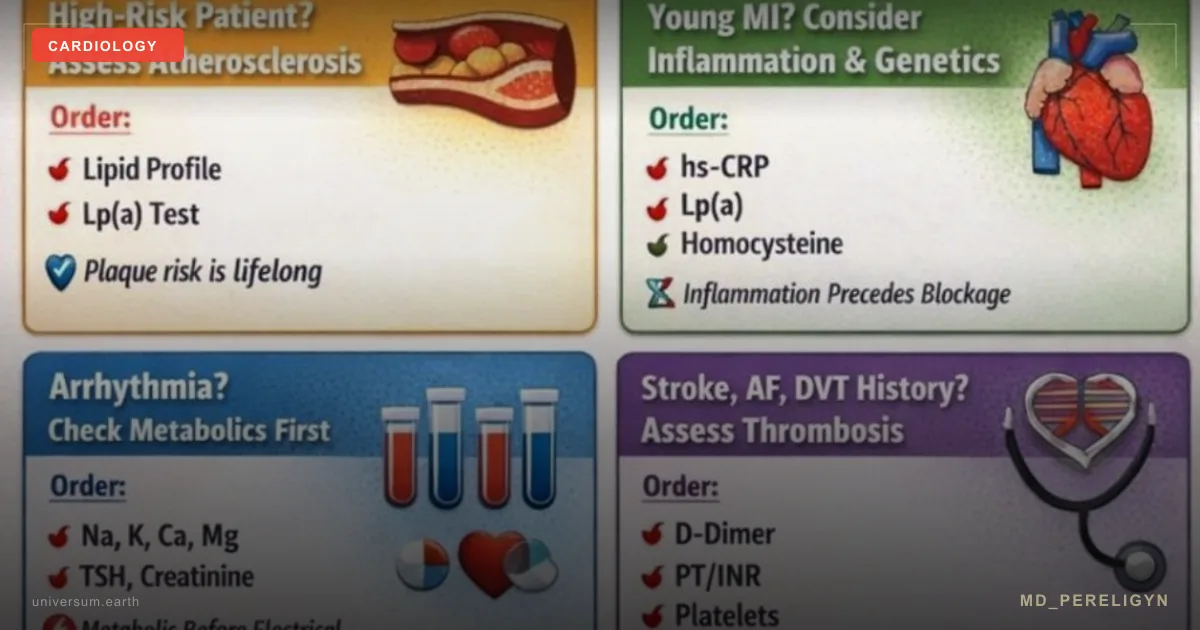
▸Lp(a) — a genetic risk factor that increases LDL atherogenicity and promotes aortic valve calcification. It is measured once as a blood test. More detail in the article Lp(a) — genetic cardiovascular risk factor. ▸ApoB — the number of atherogenic particles in plasma. LDL shows cholesterol within these particles; ApoB shows their number. ApoB predicts risk more accurately, especially in metabolic syndrome. ▸hsCRP — a marker of vascular inflammation and plaque instability. Plaque can be small but "hot." ▸Endothelial dysfunction — an early stage of vascular injury that precedes plaque by 10–20 years. See Endothelium: foundation of vascular health. ▸Soft (non-calcified) plaque — only contrast-enhanced CT angiography or IVUS can see it.
🌀
Holistic protocol for different CAC levels
1. CAC = 0
▸Confirm that there are no other high-risk markers: Lp(a), family history, ApoB > 100 mg/dL, hsCRP > 2 mg/L. ▸Support: Mediterranean / DASH diet, movement 150+ min/week, omega-3 index >8%, vitamin D 50–80 ng/mL, sleep control. ▸Do not prescribe a statin by default if overall risk is low and there is no familial hypercholesterolemia. ▸Repeat in 5–7 years (earlier if younger than 50 years).
2. CAC 1–99
▸Intensify prevention: ApoB target <80 mg/dL, blood pressure <120/80, omega-3 index >8%, insulin sensitivity index (HOMA-IR <1.5). ▸Nutraceuticals: omega-3 EPA+DHA 2 g/day, magnesium (glycinate) 400 mg, vitamin D3 + K2 (MK-7) 100–200 μg, CoQ10 100–200 mg, pomegranate extract 250–500 mg for the endothelium. ▸Lifestyle: smoking cessation (absolute priority), 7–8 h of sleep, strength + aerobic training. ▸Statin decision: individualized, based on the totality of factors. In some patients, it is reasonable to start a low-dose statin (rosuvastatin 5–10 mg).
3. CAC 100–399
▸Statin therapy for most: rosuvastatin 10–20 mg or atorvastatin 20–40 mg with a target ApoB <70 mg/dL / LDL <70 mg/dL. ▸Blood pressure control to <130/80, ideally 120/80 when possible. ▸HbA1c <5.7%, fasting insulin <8 μIU/mL. ▸Aspirin 75–100 mg — discussed individually if bleeding risk is not increased. ▸Full carotid artery evaluation (internal carotid artery ultrasound), functional stress test if symptomatic. ▸Holistic support: omega-3 2–4 g/day, CoQ10 200 mg (especially on a statin), polyphenols (pomegranate, cocoa, EGCG), magnesium 400 mg.
4. CAC ≥ 400
▸Aggressive lipid-lowering: statin + ezetimibe; if ApoB does not reach the target <65 mg/dL — add a PCSK9 inhibitor (alirocumab, evolocumab). ▸Stress test and/or CT angiography to identify a functionally significant stenotic zone. ▸Cardiologist: lifelong follow-up, discussion of revascularization if ischemia is present. ▸Control of all modifiable factors: smoking — complete cessation, blood pressure, glycemia, weight, sleep, stress. ▸Holistic support: the same nutraceuticals as for CAC 100–399, plus emphasis on the endothelial protocol (L-arginine 3–6 g, citrulline 3 g, BH4 regeneration with polyphenols).
🌀
What does NOT work
▸CAC in a patient <40 years without family history — a zero result is not reassuring, because plaque has not yet had time to calcify. Lp(a) and ApoB are better. ▸Repeating CAC annually — changes accumulate slowly; an informative interval is 3–5 years (1 year when selecting aggressive therapy). ▸Using CAC as a replacement for the lipid panel — these are two different snapshots. Score 0 with ApoB 130 mg/dL and Lp(a) 100 nmol/L still means high risk; the plaque simply has not calcified yet. ▸Ignoring symptoms when CAC = 0 — typical angina requires evaluation regardless of the score. Score 0 does not exclude rupture of a young soft plaque. ▸Prescribing a statin based only on CAC without assessing overall risk — in a patient with CAC 50 and ApoB 60 mg/dL plus excellent lifestyle, the statin decision is individualized.
🌀
When to seek care
▸Age 40–75 years with intermediate ASCVD risk (5–20% over 10 years) ▸Family history of coronary artery disease / myocardial infarction / stroke before age 60 years (men <55, women <65) ▸Borderline lipids + uncertainty about a statin ▸Metabolic syndrome, prediabetes, type 2 diabetes ▸Lp(a) > 50 mg/dL (>125 nmol/L) ▸hsCRP > 2 mg/L on repeated testing ▸Desire for an objective assessment of vascular age
I perform full vascular stratification (CAC, Lp(a), ApoB, omega-3 index, hsCRP, HOMA-IR) and create a personalized plan — which tests, in what order, and which holistic protocol fits your risk level.
🌀
Conclusion
CAC score is the most accurate single screening test for cardiology risk in an asymptomatic adult. It does not replace the lipid panel and is not the same as "having the full workup," but it reclassifies patients more accurately than any risk score. Score 0 provides a justified opportunity to work through prevention; Score > 400 justifies aggressive therapy.
The combination of CAC + ApoB + Lp(a) + hsCRP + omega-3 index gives the physician four different cross-sections of the same process: accumulated damage, current pressure, genetic background, and inflammation. This quartet is the basis of modern cardiovascular prevention, and it is exactly what the md_pereligyn protocol places above the ASCVD score.
Treat the vessel, not its complications.
🌀
Sources
▸Detrano R, Guerci AD, Carr JJ, et al. Coronary calcium as a predictor of coronary events in four racial or ethnic groups. N Engl J Med 2008;358:1336–1345. PMID 18367736[1] ▸Polonsky TS, McClelland RL, Jorgensen NW, et al. Coronary artery calcium score and risk classification for coronary heart disease prediction. JAMA 2010;303:1610–1616. PMID 20424251[2]
Related articles: Endothelium: foundation of vascular health, Cholesterol without statins.
🌀
FAQ
Is the radiation from CAC dangerous? The dose is 0.5–1.5 mSv — equivalent to annual natural background radiation or 2–3 intercontinental flights. For screening once every 5–7 years, this is safe. Women of reproductive age should discuss it with a physician; it is contraindicated in pregnancy.
If my CAC = 0, can I forget about cholesterol? No. Score 0 does not exclude soft non-calcified plaque and does not cancel genetic risk (Lp(a)). If ApoB > 100 mg/dL or Lp(a) > 50 mg/dL — continue prevention. Repeat CAC in 5–7 years.
Can already detected CAC be "reset to zero"? Calcification is irreversible — calcified deposits cannot be "dissolved." But progression can be stopped and plaque stabilized: the goal is not to "zero out the score," but to prevent it from growing faster than 10–15% per year. With a statin + holistic protocol, this is achievable.
Why ApoB if CAC has already been done? CAC is a snapshot of the past; ApoB is the pressure pushing toward new plaque right now. Controlling ApoB after CAC means preventing plaque growth. Without ApoB, you know what happened before, but not where you are going.
How soon should CAC be repeated? With CAC = 0 — in 5–7 years (earlier in younger people). With CAC 1–99 — in 3–5 years. With CAC 100–399 — in 3 years or after a therapy change. With CAC > 400 — repeat testing is usually unnecessary; the focus is functional diagnostics and ApoB control.
This article is informational and does not replace medical consultation. Before starting any nutraceuticals, changing medication therapy, or undergoing diagnostic procedures, discuss the plan with your treating physician.
Key facts
- CAC score is a low-dose non-contrast CT (0.5–1.5 mSv) that directly visualizes plaque on the Agatston scale.
- Score 0 in adults over 45 means a 10-year MI risk below 1%; Score ≥400 equals established coronary disease.
- Each doubling of CAC above 100 doubles risk; the growth is exponential.
- CAC does not replace Lp(a), ApoB, or hsCRP — it is a snapshot of past damage, not current pressure or inflammation.
- Calcification is irreversible; the goal is to keep growth below 10–15% per year, not to zero out the score.