Introduction: Lithium Beyond Bipolar Disorder
Lithium — the third element in the periodic table and one of the oldest psychotropic agents, used in psychiatry since 1949. Lithium carbonate at 900-1,800 mg/day (plasma level 0.6-1.2 mEq/L) remains the gold standard for manic episode prophylaxis in bipolar disorder.
However, over the past two decades, a growing body of research demonstrates that significantly lower doses of lithium — 50 to 100 times below psychiatric levels — possess potent neuroprotective, neurotrophic, and anxiolytic properties. This discovery is transforming the perception of lithium from a "heavy" psychiatric drug into a subtle neuromodulator.
Mechanisms of Low-Dose Lithium
GSK-3-beta Inhibition
GSK-3-beta is a key enzyme involved in neurodegeneration, inflammation, and neuronal apoptosis. Lithium is a direct GSK-3-beta inhibitor. A study in Nature (2004) showed that even low lithium concentrations (0.1-0.5 mM) significantly inhibit GSK-3-beta, leading to: Wnt signaling pathway activation (neurogenesis), increased Bcl-2 expression (anti-apoptotic protein), and reduced neuroinflammation via NF-kB suppression.
Neurotrophic Effect (BDNF)
Lithium increases expression of brain-derived neurotrophic factor (BDNF) — the key neuroplasticity protein. A meta-analysis in Neuroscience & Biobehavioral Reviews (2014) showed that even low-dose lithium significantly increases serum BDNF levels. BDNF is critical for forming new synaptic connections and restoring neuronal networks damaged by chronic stress.
GABA System Modulation
Lithium enhances GABAergic neurotransmission through multiple mechanisms: increased GABA synthesis, enhanced GABA receptor sensitivity, and inhibition of glutamate excitotoxicity. GABA deficiency is considered a key pathophysiological mechanism in anxiety disorders.
Neuroprotection
Lithium increases gray matter volume. Moore et al. (The Lancet, 2000) demonstrated a 3% increase in gray matter volume after 4 weeks of lithium therapy. Even at low doses, lithium protects neurons from oxidative stress, excitotoxicity, and inflammation.
Clinical Evidence for Low-Dose Lithium
Anxiety and Panic Attacks
While large RCTs on low-dose lithium for anxiety are still pending, pilot studies and observational data demonstrate effect. Studies have shown a correlation between lithium content in drinking water and lower anxiety levels in populations.
Schrauzer & Shrestha (Biological Trace Element Research, 1990) found an inverse correlation between lithium in tap water (4-160 mcg/L) and rates of suicide, violent crime, and psychiatric hospitalizations across 27 Texas counties.
Neurodegeneration and Cognitive Impairment
Nunes et al. (British Journal of Psychiatry, 2013) — RCT in Alzheimer's patients: microdose lithium (300 mcg/day) for 15 months stabilized cognitive function (MMSE) and reduced phosphorylated tau protein in cerebrospinal fluid.
Forlenza et al. (Pharmacopsychiatry, 2019) systematic review: low-dose lithium has neuroprotective potential in Alzheimer's disease and mild cognitive impairment.
Impulsivity and Aggression
Sheard et al. (American Journal of Psychiatry, 1976): sub-therapeutic lithium doses reduced impulsive aggression. This effect is directly relevant to anxiety, where impulsive components often amplify panic responses.
Lithium Orotate vs Lithium Carbonate
Lithium carbonate — prescription medication containing ~18.8% elemental lithium. A 300 mg tablet = 56.4 mg elemental lithium. Therapeutic dose: 900-1,800 mg/day. Requires plasma level monitoring.
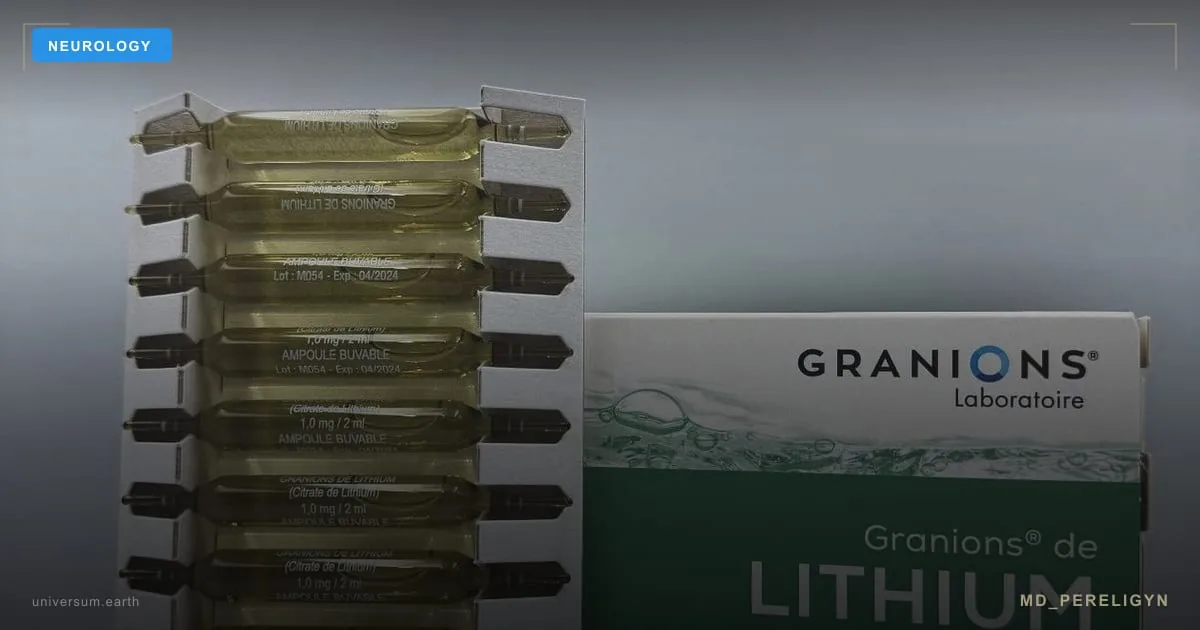
Lithium orotate — OTC supplement containing ~3.83% elemental lithium. A 120 mg tablet = 4.6 mg elemental lithium. Orotic acid is a natural cellular membrane transporter, theoretically providing better cellular penetration at much lower doses.
Comparison: standard lithium orotate supplementation (5-20 mg elemental lithium) provides a 10-50 times lower dose than psychiatric carbonate doses. At these doses, plasma lithium does not reach measurable levels, eliminating the classic side effects of high-dose therapy.
| Form | Elemental lithium | Dose |
|---|---|---|
| Orotate (120 mg tablet) | 4.6 mg (~3.83%) | 5-20 mg/day |
| Carbonate (300 mg tablet) | 56.4 mg (~18.8%) | 900-1,800 mg/day |
Application Protocol for Anxiety
Microdose Lithium Safety
At doses of 5-20 mg elemental lithium, side effects characteristic of high-dose therapy (tremor, polyuria, hypothyroidism, nephrotoxicity) are NOT observed. Plasma concentration does not reach the therapeutic range (0.6-1.2 mEq/L).
Frequently Asked Questions
Is lithium orotate the same as lithium for bipolar disorder? The active element is the same (lithium ion), but the dose is 10-50 times lower. It is like comparing one cup of coffee with 50 cups — the effects are fundamentally different.
Do I need blood tests? At microdoses (<20 mg/day) — not mandatory, but for long-term use (>6 months), checking TSH and creatinine is recommended.
Can I combine with antidepressants? In most cases yes, but physician supervision is mandatory. Lithium may enhance serotonergic effects of SSRIs (serotonin syndrome risk at high doses).
How quickly does the effect appear? Anxiolytic effects may emerge within 1-2 weeks. Neuroprotective benefits require 4-8 weeks and build over time.
This article is for informational purposes only. Anxiety disorders require consultation with a psychiatrist or neurologist. Do not replace prescribed therapy on your own.
🌀
Endocrinological differential diagnosis before any lithium trial
Anxiety and panic symptoms are non-specific. Before recommending any neuromodulator — including microdose lithium — a structured endocrine workup is mandatory. In an outpatient endocrinology setting, an estimated 5–15% of patients presenting with new-onset anxiety, palpitations, or panic attacks have a measurable hormonal driver that fully or partially explains the syndrome.
Mandatory laboratory minimum before lithium:
- TSH, free T4, free T3, anti-TPO antibodies. Hyperthyroidism (TSH <0.4 mIU/L with elevated free T4 and/or free T3) produces tachycardia, tremor, heat intolerance, and panic-like episodes indistinguishable phenomenologically from primary panic disorder. Untreated Graves disease misdiagnosed as panic disorder is a recurring pattern in primary-care referrals. - Fasting glucose and HbA1c. Reactive hypoglycemia (postprandial glucose <55 mg/dL) and undiagnosed insulin resistance with glucose lability both produce adrenergic surges that present as panic attacks. - 24-hour urinary metanephrines and normetanephrines or plasma free metanephrines. Pheochromocytoma is rare (annual incidence ~2 per million) but carries a paroxysmal hypertension–anxiety–headache triad that mimics panic disorder; missing it delays definitive surgical treatment. - Morning serum cortisol and 24-hour urinary free cortisol, or late-night salivary cortisol. Both Cushing syndrome and chronic HPA-axis dysregulation produce anxiety; primary adrenal insufficiency can produce salt craving and orthostatic anxiety. - Serum calcium, parathyroid hormone, and vitamin D 25(OH). Primary hyperparathyroidism with hypercalcemia (corrected calcium >10.5 mg/dL) presents with anxiety, fatigue, and cognitive complaints in roughly one-third of cases. - Ferritin and complete blood count. Iron deficiency without anemia (ferritin <30 ng/mL) is a recognized contributor to anxiety and restless legs syndrome and is correctable.
Cardiac and substance screen:
- Resting ECG to exclude paroxysmal supraventricular tachycardia and long-QT syndrome (which would also flag lithium as relatively contraindicated due to its minor QT-prolonging effect). - Caffeine intake quantification (>400 mg/day is a common occult driver), and a screen for stimulant medications (modafinil, ADHD agents, decongestants), alcohol withdrawal, and cannabis-induced anxiety.
Only after this differential is closed does microdose lithium become an evidence-rational addition. Treating an undiagnosed hyperthyroid patient with lithium is particularly hazardous: lithium suppresses thyroid hormone release, can mask Graves disease, and then trigger a delayed thyroid storm on withdrawal. The article's silence on this screening step is the single most important gap for an endocrinology readership.
🌀
Lithium and pregnancy: dose-dependent risk quantified
The original article lists pregnancy first trimester as a contraindication and cites Ebstein anomaly risk without numbers. The largest cohort to date — Patorno et al., New England Journal of Medicine 2017 — analyzed 1,325,563 Medicaid pregnancies including 663 with first-trimester lithium exposure PMID: 28591541. The findings refine, rather than confirm, the historical position that any lithium during early pregnancy is teratogenic.
Headline numbers:
- Cardiac malformations occurred in 2.41% of lithium-exposed infants versus 1.15% of unexposed infants (adjusted risk ratio 1.65, 95% CI 1.02–2.68) PMID: 28591541. - Right ventricular outflow tract obstruction defects, which include Ebstein anomaly, occurred in 0.60% of exposed infants versus 0.18% of unexposed (adjusted risk ratio 2.66, 95% CI 1.00–7.06) PMID: 28591541. - The dose-response gradient is sharp: at ≤600 mg/day lithium carbonate the adjusted risk ratio was 1.11 (95% CI 0.46–2.64, statistically non-significant); at 601–900 mg/day it was 1.60 (95% CI 0.67–3.80, non-significant); at >900 mg/day it rose to 3.22 (95% CI 1.47–7.02) PMID: 28591541.
Clinical interpretation for microdose use:
The doses studied by Patorno et al. were psychiatric (typically 600–1,800 mg lithium carbonate, providing 112–338 mg elemental lithium). Microdose lithium orotate delivers 5–20 mg of elemental lithium, which is 6–67 times lower than the lowest dose category in the NEJM cohort. There are no human teratogenicity data at this exposure level. Because elemental lithium does cross the placenta and the malformation window for cardiac development closes around gestational week 8, the conservative position remains: discontinue lithium orotate at least one month before planned conception and avoid throughout the first trimester. Trace dietary and water-source lithium (which can reach 0.1–0.5 mg/day in some regions) is not associated with congenital risk and need not be modified.
The article's prior statement is therefore correct in direction but lacks the dose-response architecture that allows a clinician to weigh risk against benefit for a patient with severe anxiety considering pregnancy.
🌀
Monitoring protocol: laboratory cutoffs and stop rules
The original article states that TSH and creatinine "are recommended for long-term use >6 months." This is operationally vague. A defensible structured protocol follows.
Baseline (before initiation):
- TSH, free T4, anti-TPO antibodies - Serum creatinine and estimated glomerular filtration rate (eGFR); urinalysis with albumin-to-creatinine ratio - Serum calcium (lithium can produce mild hyperparathyroidism over years) - Pregnancy test in women of reproductive age - Resting ECG in patients over 50, with cardiovascular risk factors, or on QT-prolonging medications
On-treatment monitoring at microdose (5–20 mg elemental lithium/day):
- Months 3 and 6: TSH, serum creatinine, eGFR, serum calcium - Then annually if all parameters stable - Plasma lithium level: not informative at microdose because concentrations are below the limit of standard clinical assays (≈0.1 mEq/L)
On-treatment monitoring at >20 mg elemental lithium/day:
- Months 1, 3, 6, then every 6 months: TSH, eGFR, calcium - Plasma lithium level at 12 hours post-dose every 6 months; expected range 0.05–0.3 mEq/L
Stop or refer rules:
- TSH >10 mIU/L on two consecutive draws → either levothyroxine replacement (if mood/anxiety benefit clear) or discontinuation - eGFR decline >25% from baseline, or absolute eGFR <60 mL/min/1.73 m² → discontinue and refer to nephrology - Corrected serum calcium >10.5 mg/dL with elevated PTH → discontinue and evaluate for lithium-associated hyperparathyroidism - New polyuria >3 L/day → check for nephrogenic diabetes insipidus and discontinue
The empirical basis for thyroid monitoring is robust: in a Mayo Clinic historical cohort of bipolar patients on long-term lithium therapy, 32% developed a thyroid disorder, of which 79% was overt or subclinical hypothyroidism PMID: 36672114. Although these data are from full psychiatric doses, the dose-response curve for thyroid effects is not fully characterized at microdose; surveillance is therefore prudent at minimal cost. For renal function, a 2026 systematic review and meta-analysis of lithium versus non-lithium control studies in affective disorders found a mean eGFR decrement of −11.14 mL/min/1.73 m² and a mean annual eGFR decline 0.13 mL/min/1.73 m² greater than controls — small but cumulative over decades PMID: 41727809.
🌀
Drug-interaction matrix with effect sizes
The original article enumerates NSAIDs, ACE inhibitors, and thiazide diuretics as drugs that "raise lithium levels" without quantification. The largest population-based study quantifying clinical impact is Juurlink et al., a nested case-control analysis of 10,615 elderly patients on lithium in Ontario, of whom 413 (3.9%) were hospitalized for lithium toxicity over a decade PMID: 15086664.
Effect sizes from Juurlink et al.:
- Loop diuretics (furosemide, bumetanide, torsemide) within the first month of initiation: relative risk of lithium toxicity hospitalization 5.5 (95% CI 1.9–16.1) PMID: 15086664. - ACE inhibitors (lisinopril, enalapril, ramipril) within the first month: relative risk 7.6 (95% CI 2.6–22.0) PMID: 15086664. - Thiazide diuretics: no statistically significant independent association in this elderly cohort, although they remain on standard interaction lists because case reports document plasma lithium increases of 25–40% PMID: 15086664. - NSAIDs (ibuprofen, naproxen, diclofenac, celecoxib): no statistically significant independent association in this cohort, although the mechanism (prostaglandin-mediated reduction in renal lithium clearance) is well established and 10–60% serum lithium increases are documented in pharmacokinetic studies PMID: 15086664.
Clinical translation for microdose use:
At elemental lithium intake of 5–20 mg/day, plasma lithium does not reach the toxic range even with a 50% pharmacokinetic increase from an interacting drug. The clinically meaningful scenario is the patient who escalates above 20 mg/day, has reduced renal function, becomes dehydrated (gastroenteritis, fever, marathon training, heat exposure), and starts an ACE inhibitor or loop diuretic in the same window. That convergence is the documented mechanism of community-acquired lithium toxicity. The risk-mitigation rule is simple: any time a new diuretic, ACE inhibitor, ARB, or chronic NSAID is started in a patient on lithium orotate >20 mg/day, recheck creatinine and TSH at 2 weeks.
ARBs (losartan, valsartan) share the renal hemodynamic mechanism with ACE inhibitors and should be treated as equivalent for monitoring purposes, although direct case-control data are sparser.
🌀
GSK-3 beta inhibition and the Wnt/beta-catenin axis: mechanism updated
The article cites a single 2004 Nature paper for GSK-3 beta inhibition. A more rigorous mechanistic foundation is available in the 2013 review by Meffre et al., which integrates Wnt signaling with neurogenesis, axon and dendrite development, synaptogenesis, and the differentiation of glial cells PMID: 23749084.
Sequential mechanism relevant to anxiety circuits:
1. Lithium ion competes with magnesium at the catalytic site of GSK-3 beta and inhibits enzymatic activity at concentrations as low as 0.1–2 mM. In vivo plasma concentrations in microdose users do not reach 1 mM, but intracellular accumulation in neurons is concentrated through orotate-mediated transport and through Wnt-driven receptor activation PMID: 23749084. 2. Reduced GSK-3 beta activity stabilizes beta-catenin in the cytoplasm. Beta-catenin translocates to the nucleus and recruits TCF/LEF transcription factors, driving expression of genes that support neuronal survival and synaptic plasticity PMID: 23749084. 3. Downstream effects include increased Bcl-2 (anti-apoptotic), reduced tau hyperphosphorylation (relevant to neurodegeneration overlap with chronic-stress states), and modulation of the canonical NMDA-glutamate balance that underlies anxiety circuit hyperexcitability PMID: 23749084. 4. Parallel effects on serotonin (5-HT1A receptor upregulation) and GABAergic tone provide a coherent mechanistic chain from "lithium ion enters the brain" to "anxiety threshold rises and panic-attack frequency declines" — even at intracellular concentrations far below those required for mania prophylaxis.
This mechanistic detail also explains why anxiolytic effects in clinical observation accumulate over 4–8 weeks rather than appearing acutely: transcriptional rewiring of neurotrophic gene expression has that timecourse, unlike GABA-receptor allosteric agonists (benzodiazepines), which act in minutes.
The ecological evidence that supports the clinical translation of this mechanism is the dose-dependent inverse correlation between lithium concentration in drinking water and suicide rate. A 2020 systematic review and meta-analysis of 27 studies covering 113 million subjects found that higher drinking-water lithium concentrations were associated with reduced suicide rates (effect size −0.191, 95% CI −0.287 to −0.090, p<0.001) PMID: 33045847. A separate 2019 meta-analysis of 14 ecologic and cohort studies (3.7 million subjects in the cohort component) found an odds ratio of 0.42 (95% CI 0.27–0.67) for suicide mortality at higher drinking-water lithium concentrations PMID: 32056756. These data do not prove causation in individuals but constrain the plausibility space for the GSK-3 beta–Wnt–beta-catenin axis as the molecular substrate of low-dose lithium's affective effects.
References
- PMID: 28591541. PMID 28591541
- PMID: 36672114. PMID 36672114
- PMID: 41727809. PMID 41727809
- PMID: 15086664. PMID 15086664
- PMID: 23749084. PMID 23749084
- PMID: 33045847. PMID 33045847
- PMID: 32056756. PMID 32056756
Key facts
- Lithium carbonate 900-1,800 mg/day (plasma 0.6-1.2 mEq/L) is the bipolar gold standard; low doses run 50-100 times below that.
- Lithium inhibits GSK-3-beta even at 0.1-0.5 mM: Wnt activation (neurogenesis), higher Bcl-2, less neuroinflammation via NF-kB.
- Lithium orotate is ~3.83% elemental lithium: a 120 mg tablet = 4.6 mg; carbonate is ~18.8%, a 300 mg tablet = 56.4 mg.
- At 5-20 mg elemental lithium, plasma stays below 0.6-1.2 mEq/L and high-dose side effects (tremor, polyuria) are not seen.
- Start 5 mg in the evening, standard 5-10 mg/day, max OTC 20 mg/day; assess the effect over 4-8 weeks.